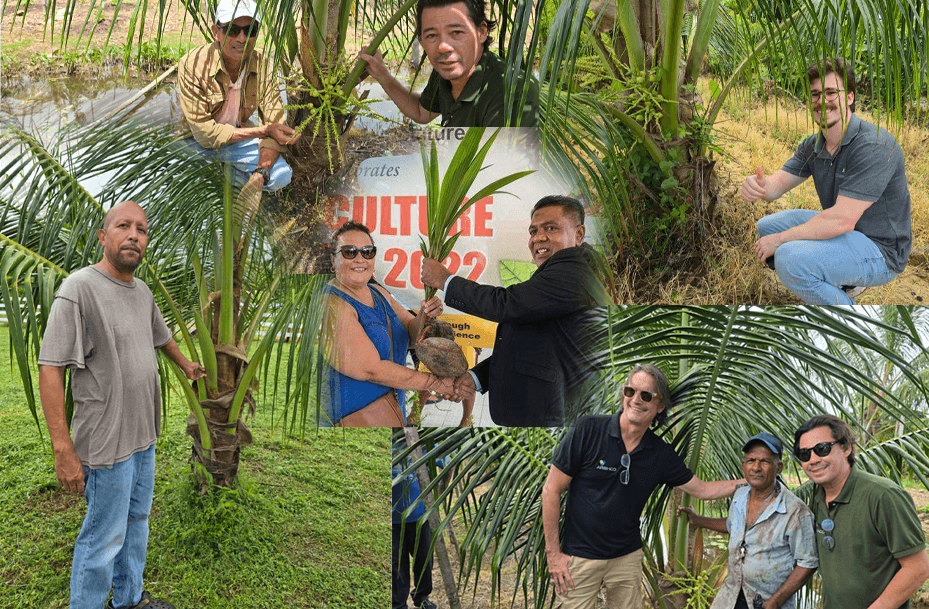
Brazilian Varieties Boost Guyana’s Coconut Sector in Major Revitalisation Drive
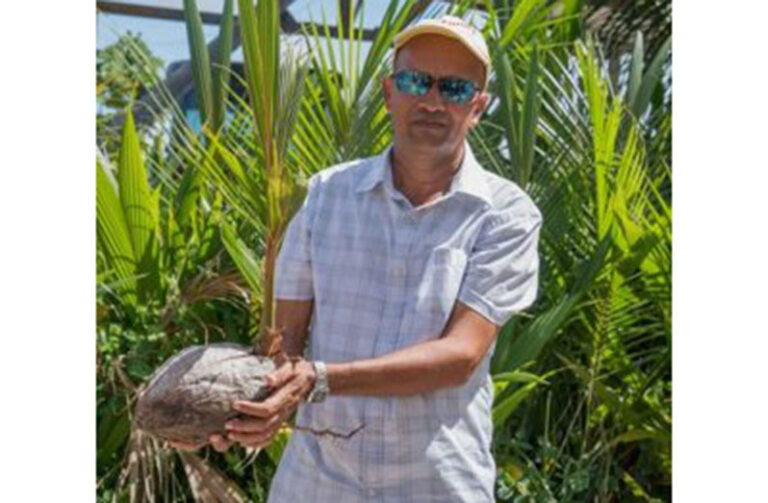
To meet the demand for coconuts nationwide, the General Manager of Hope Coconut Industries Ltd, Ricky Roopchand, announced that the company has initiated a programme to replenish all ten nurseries with high-quality seedlings and a high-yielding variety of coconuts from Brazil, ensuring easy access for farmers.
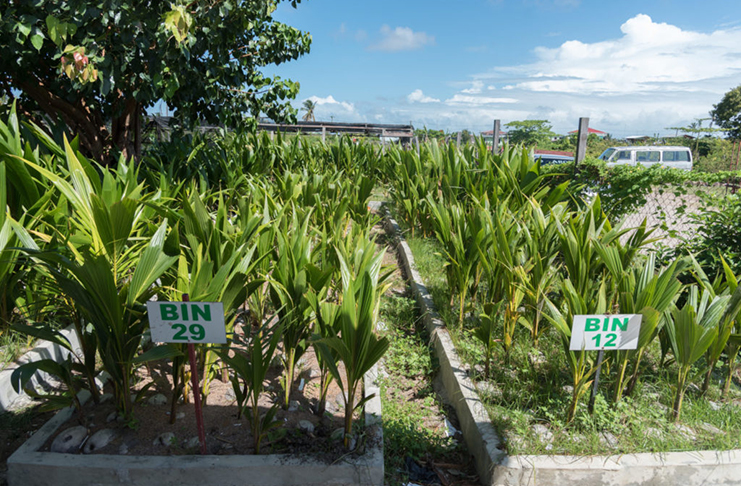
In an interview with The El Dorado Beacon from the island of Wakenaam, Mr. Roopchand shared that they are in the process of restocking the nursery with the Brazilian Green Dwarf Coconut and the Suriname Brown, (18-month) variety, which is favoured by many farmers in certain areas.
According to the General Manager, “We are here on the island of Wakenaam, restocking the nursery with the imported variety from Brazil and some of the Suriname Brown (18-month variety).
This will be a continuous exercise throughout the year, with a target to import at least 120 thousand coconut seed nuts this year.”
Given that the climate there is similar to that of Guyana, Mr. Roopchand explained that most of the imported quantity comes from Brazil. He also added that the performance was satisfactory after being tested for more than three years.
The General Manager also mentioned that the estimated amount to be imported will cover approximately over two thousand acres.
“Many of the varieties started to produce in 22 months, 24 months, and 28 months, even though the Brazilians had labelled it a three-year variety.
That goes to show that our soil and climate here are suitable for the cultivation of this variety,” Mr. Roopchand related.
With contagious optimism and a shared vision for sustainable agriculture, a high-level team from (Technology in the Production of Coconut Trees) COHIBRA, Brazil, recently concluded a landmark visit to Guyana—where they were greeted by a transformed coconut industry, one revitalised through strategic government investment, international collaboration, and community commitment.
The visit served as both a symbolic and practical milestone, marking three years since the Government of Guyana embarked on an ambitious journey to revamp the once-declining coconut sector.
While in Guyana, the COHIBRA representatives exclusively told The El Dorado Beacon that they came to Guyana with a clear agenda: to witness firsthand the development of the seed nuts they had supplied, engage with local farmers, and assess the overall health of the industry. What they found exceeded their expectations.
“We were delighted with how the seed nuts were meticulously arranged in the bins and the health of the nurseries we visited,” said Tiago Seixas Themudo, Caribbean Export Manager at COHIBRA. “The fertility of the soil here is truly remarkable.”
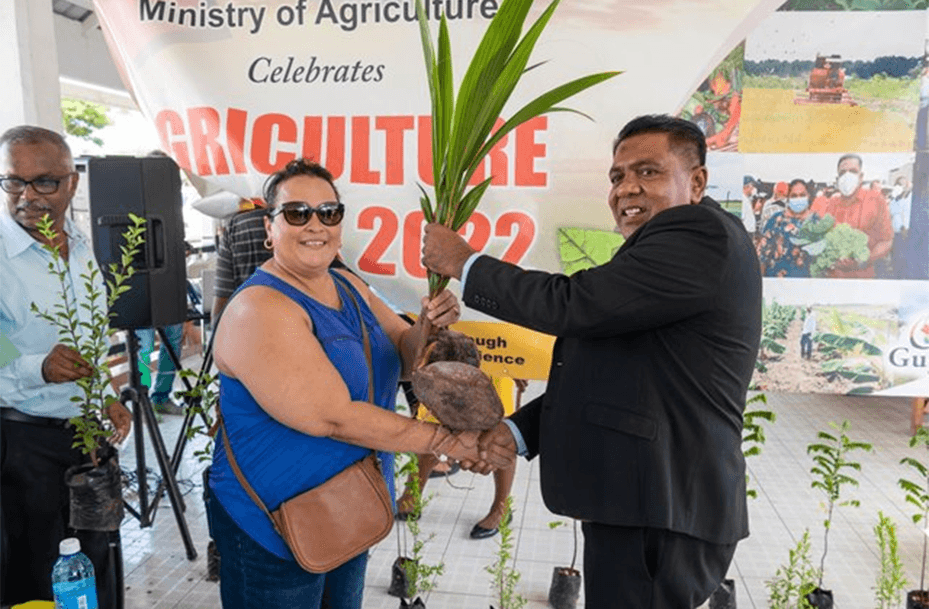
But more than just observing progress, Themudo’s team engaged in deeper discussions with farmers and government officials, culminating in a meeting with Minister Mustapha that opened new doors for co-operation.
Minister Mustapha proposed a bold next step in the partnership: training Guyanese coconut farmers at COHIBRA’s facilities in Brazil. The initiative, Themudo explained, is designed to boost farmers’ knowledge of advanced techniques and management practices, enhancing their capacity to sustain and grow the industry.
“Guyana has competent people leading this project. With the right knowledge and continued support, the coconut industry here will explode,” Themudo stated, visibly impressed by the passion of the Minister and the progress on the ground.
He further commended President Ali’s government for promoting sustainable agriculture, not just in Guyana but throughout the region. “It’s the right perspective. This kind of development cannot be done alone. With pooled knowledge and shared resources, everyone benefits. We are a poor region, but together, we are strong,” Themudo added.
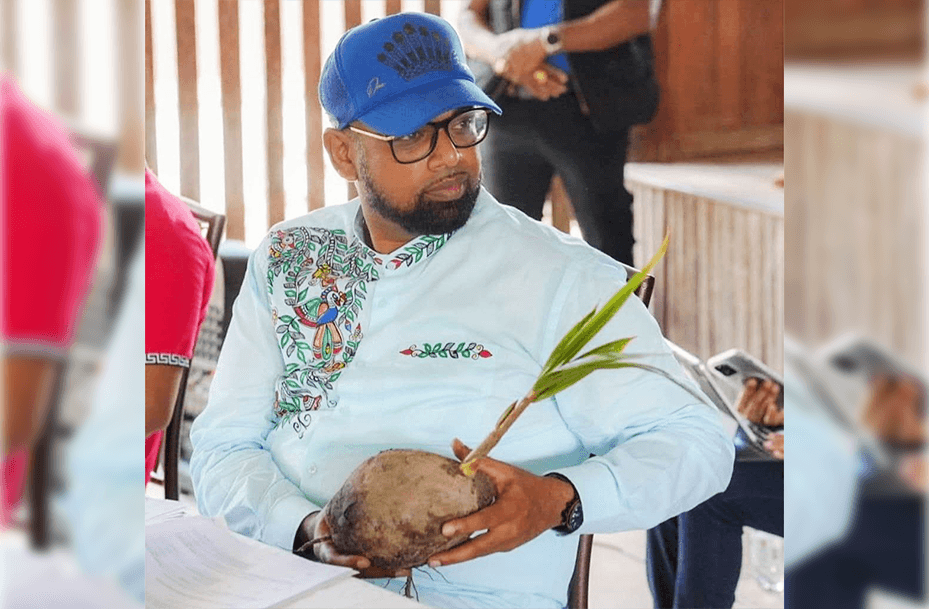
Lailton Arruda Barreto Filho, Director of New Projects Operation at COHIBRA, highlighted the profitability and low maintenance of the coconut business, calling it a “golden opportunity” for both large-scale and small-scale farmers.
“Coconut farming is inclusive. One tree can last up to 50 years. If you treat the tree well, it will treat you well in return,” added COHIBRA’s CEO, Lailton Arruda Barreto, reinforcing the long-term value of investment in the sector.
Barreto said Minister Mustapha’s training proposal would be especially important in dispelling fears and encouraging hesitant farmers to join the sector, equipped with better knowledge and a support network.